The Future of Insurance: Talent, Technology, and AI
The insurance industry is at a critical turning point.
A growing talent shortage, rapid technological change, and the rise of artificial intelligence are forcing insurance leaders to rethink how they attract talent, operate efficiently, and prepare for what’s next.
Recently, our COO Michelle joined Diane Brassard on the Roots podcast for a wide-ranging conversation about the future of insurance, covering everything from workforce challenges to responsible AI adoption and what insurance careers will look like in the years ahead.
Below are the key takeaways from that conversation for insurance leaders, operators, and anyone curious about where the industry is headed.
Key Takeaway #1: The Insurance Talent Crisis Is Real and Accelerating
One of the most urgent threats to the future of insurance isn’t technology, it’s talent.
Nearly half of the insurance workforce is expected to retire in the coming years, creating a massive experience gap across underwriting, claims, operations, and leadership. At the same time, insurance remains underrepresented in early career conversations, leaving many students unaware of the variety of roles available within the industry.
Michelle noted that earlier generations benefited from immersive, in-person training programs that not only built skills but also fostered loyalty and long-term career growth. Many of those programs no longer exist in the same form today.
The result: fewer fully developed professionals and a shrinking pipeline of experienced talent.
Key Takeaway #2: Engagement, Not Just Compensation, Will Define the Future of Insurance Careers
Retention challenges in insurance aren’t just about pay.
Today’s workforce expects meaningful work, visible career paths, and opportunities to grow. When those elements are missing, professionals are far more likely to move roles every few years, and often within the same industry.
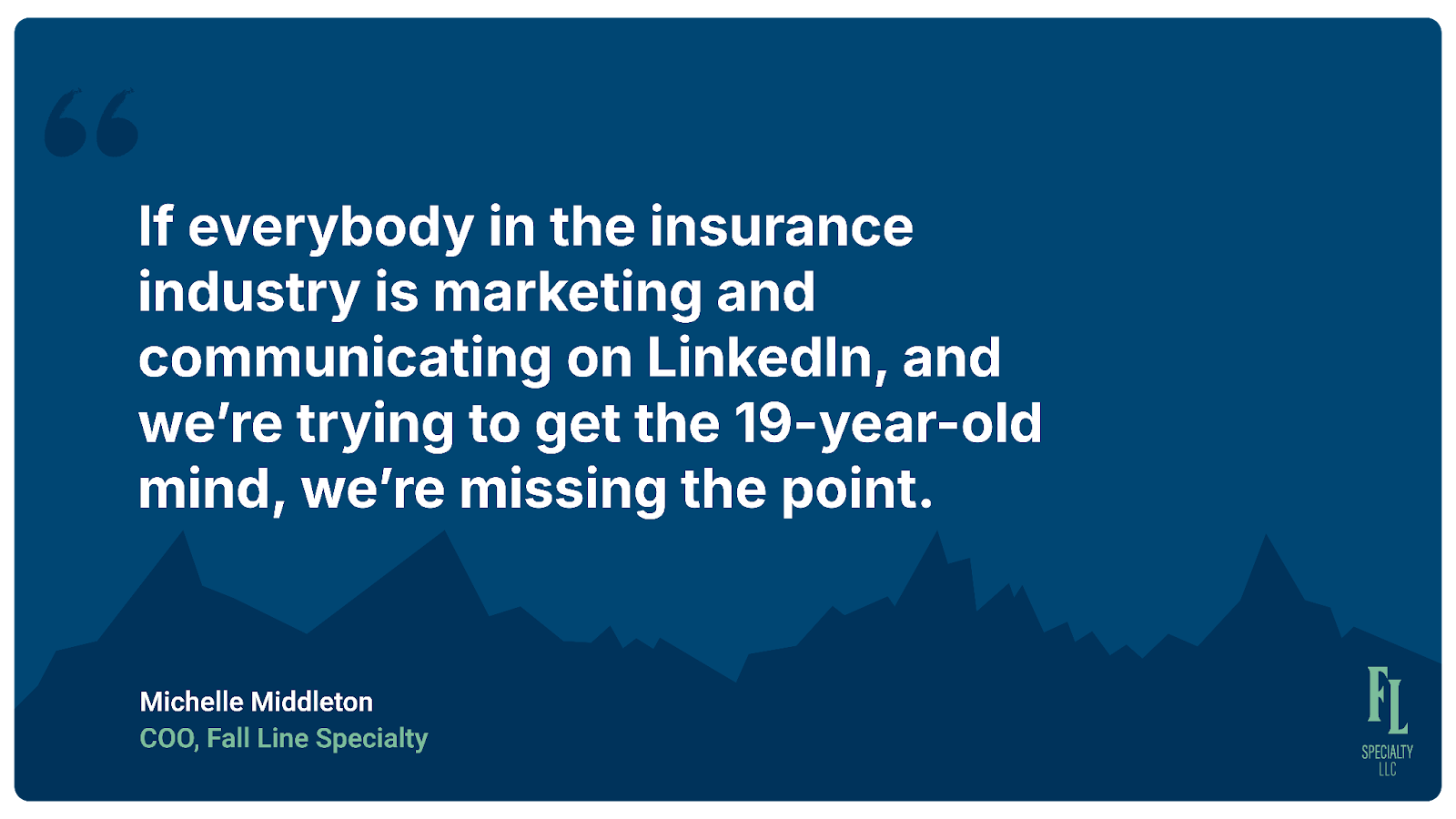
Michelle emphasized that insurance has a branding problem, not a value problem. The industry offers stability, intellectual challenge, and real-world impact — but it needs to do a better job telling that story and reaching talent where they actually are.
The future of insurance careers depends on engagement, visibility, and purpose, not just compensation.
Key Takeaway #3: Technology Has Always Shaped Insurance. AI Is the Next Evolution.
Insurance has been evolving alongside technology for decades, from green screens and fax machines to personal computers and mobile devices. Each shift increased speed, accessibility, and expectations.
Artificial intelligence is simply the next phase, but with broader reach.
AI in insurance is already improving:
document processing
operational workflows
data analysis
internal communications
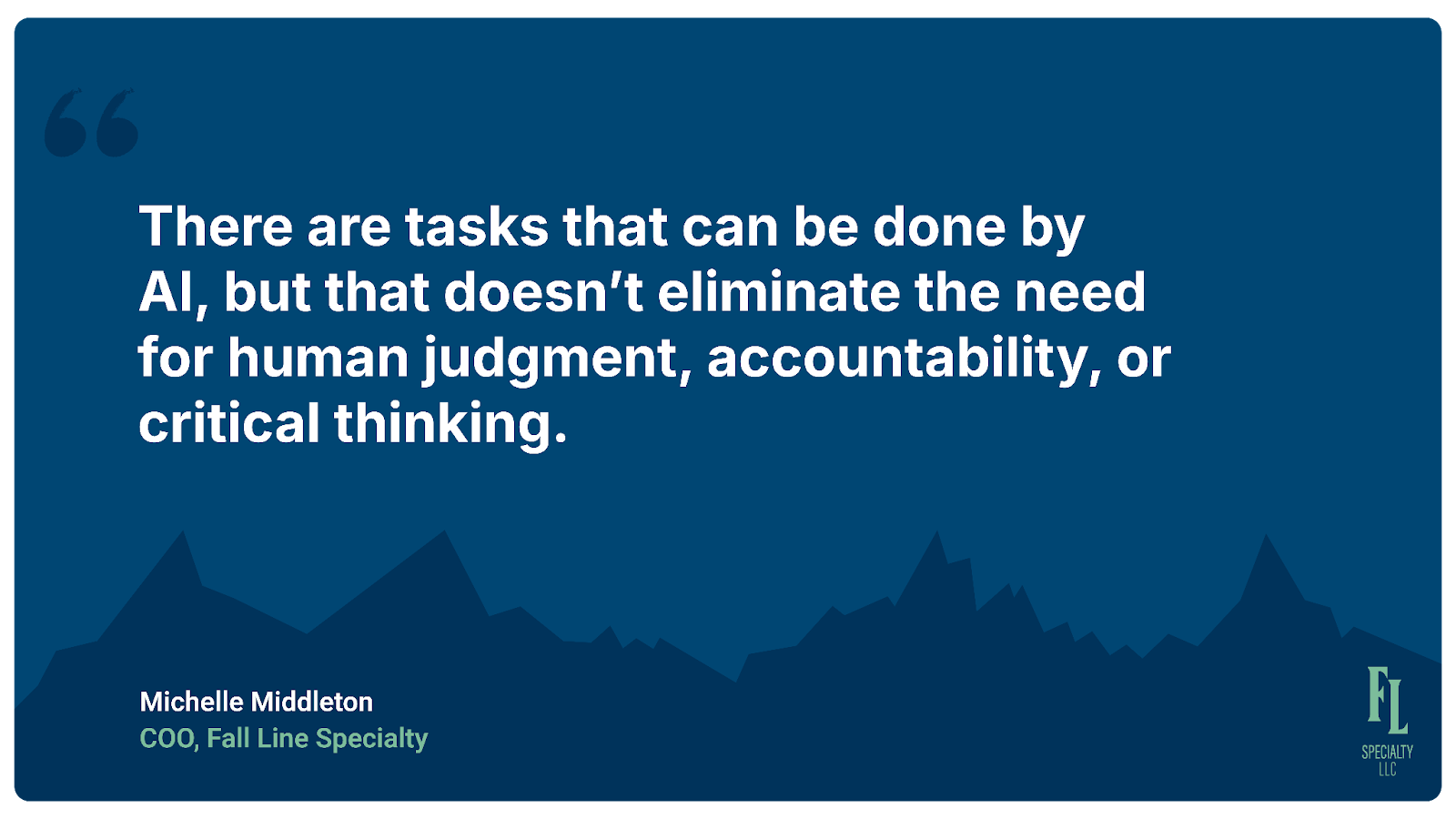
Rather than replacing professionals, AI is eliminating repetitive, low-value tasks, giving teams more time for judgment, strategy, and relationship-building.
Key Takeaway #4: Will AI Replace Insurance Agents? No, But Roles Will Change.
A common concern raised across the industry is whether AI will replace insurance agents, underwriters, or claims professionals.
Michelle’s perspective was clear: AI will not replace insurance professionals, but professionals who don’t adapt may struggle.
The future of insurance work will rely on a human-in-the-loop model, where AI supports decision-making through speed and insight, while humans remain accountable for outcomes, accuracy, and client trust.
Those who learn to work alongside AI will be better positioned to lead.
Key Takeaway #5: Responsible AI Adoption Is Non-Negotiable
AI brings opportunity, but also risk.
In an industry built on trust, compliance, and data security, careless AI adoption can create serious consequences. Michelle stressed the importance of:
clear guardrails for AI usage
accountability for outputs
secure, enterprise-grade environments
education around AI risks, not just benefits
Responsible AI frameworks are essential to protecting both customers and organizations as adoption accelerates.
Key Takeaway #6: Start Small, Build Momentum
The most effective AI strategies don’t begin with sweeping transformation.
Instead, Michelle recommends starting with low-risk, high-impact use cases such as:
inbound document triage
submission summarization
operational efficiency improvements
internal content and communications support
By involving frontline teams in identifying pain points, organizations can ensure AI enhances, rather than disrupts, daily work.
What This Conversation Reveals About the Future of Insurance
The future of insurance isn’t defined by AI alone.
It will be shaped by how well organizations balance:
talent development
technology adoption
responsible innovation
and human judgment
Insurance leaders who invest in people while embracing AI thoughtfully will define the next era of the industry.
Want to Hear the Full Conversation?
Listen to the full episode here, where Michelle and Diane dive deeper into:
the insurance talent shortage
real-world AI use cases
leadership lessons from decades in the industry
what insurance careers will look like in the next 10 years